
Don't Ignore These Piles Symptoms: Expert Advice from a Piles Specialist in Thergaon
Bleeding, itching, or pain during bowel movements? Learn the early warning signs of piles, why they shouldn't be ignored, and when it's time to see a specialist.
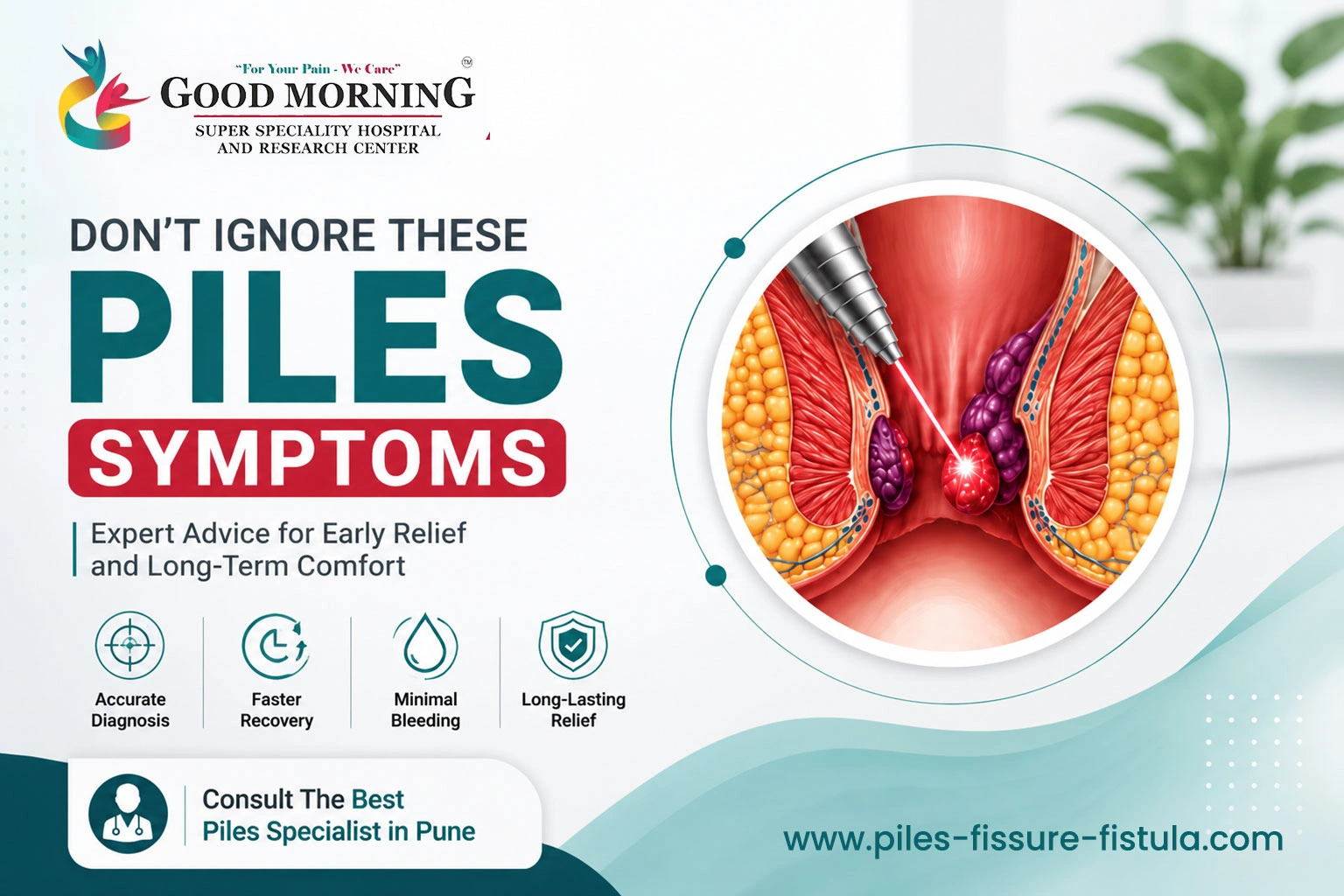
Many people ignore the early symptoms of piles because they assume the discomfort will disappear on its own. Mild bleeding, itching, pain while passing stools, or a small swelling near the anus are often managed with home remedies without understanding the actual cause.
While some lifestyle changes may provide temporary relief, persistent symptoms should never be ignored. Piles, also known as hemorrhoids, are a common condition that can affect people of all ages. When diagnosed early, they can often be managed effectively with the right medical advice and appropriate treatment. If you're based nearby, consulting a piles specialist in Thergaon can help you get an accurate diagnosis without unnecessary delay.
If these symptoms sound familiar, consulting an experienced specialist near you can help you get an accurate diagnosis and a treatment plan suited to your condition.
Noticed bleeding or discomfort recently?
Talk to our colorectal specialists at Good Morning Superspeciality Hospital, Thergaon, for an accurate diagnosis and personalised advice.
📞 Call NowWhat Are Piles?
Piles are swollen veins in the lower rectum or around the anus. They develop when excessive pressure is placed on these veins over a prolonged period. Common causes include chronic constipation, straining during bowel movements, sitting for long periods, pregnancy, obesity, a low-fibre diet, lack of physical activity, and heavy weight lifting.
Piles may be internal, external, prolapsed, or thrombosed. Each type requires proper medical evaluation before deciding the most suitable treatment.
Internal vs External Piles: What's the Difference?
Not all piles feel or behave the same way, and understanding the difference can help you describe your symptoms more accurately during a consultation.
Internal Piles
These develop inside the rectum and are usually painless in the early stages, since this area has fewer pain-sensing nerves. They often show up as bleeding without pain, though advanced cases may prolapse (bulge outside the anus) and cause discomfort.
External Piles
These form under the skin around the anus, an area rich in nerve endings. As a result, external piles are more likely to cause pain, itching, and visible swelling, and can become more uncomfortable if a blood clot forms inside them (a thrombosed pile).
Grades of Piles: How Severity Is Classified
Doctors typically classify internal piles into four grades based on severity, which helps determine the most appropriate treatment approach:
| Grade | Description | Typical Approach |
|---|---|---|
| Grade I | Small, stay inside the rectum, may bleed | Diet & lifestyle changes, medication |
| Grade II | Prolapse during bowel movements, retract on their own | Lifestyle changes, minimally invasive procedures |
| Grade III | Prolapse and need to be pushed back manually | Minimally invasive or laser treatment |
| Grade IV | Permanently prolapsed, cannot be pushed back | Surgical or laser treatment |
This grading is only a general guide — your specialist will confirm the exact grade and recommend treatment based on a full clinical examination.
Common Symptoms You Should Never Ignore
Recognizing the symptoms early can help prevent complications. Some of the most common symptoms include:
- Bright red bleeding during or after passing stools
- Pain while sitting or during bowel movements
- Persistent itching around the anus
- Swelling or a lump near the anal opening
- Burning sensation
- Mucus discharge
- Feeling of incomplete bowel evacuation
- Discomfort while walking or sitting for long periods
If these symptoms continue for more than a few days or become more frequent, it's best to get a proper evaluation rather than relying only on self-treatment.
Why Ignoring Piles Can Be Risky
Many patients hesitate to seek medical advice because of embarrassment. Unfortunately, delaying treatment may lead to worsening symptoms and unnecessary discomfort. Untreated piles may result in increased pain and swelling, frequent bleeding, enlarged hemorrhoids, difficulty during bowel movements, reduced quality of life, and recurring episodes.
Early diagnosis often makes treatment simpler and recovery faster.
When Should You Visit a Specialist?
You should schedule a consultation if you experience:
- Bleeding that occurs repeatedly
- Severe pain while passing stools
- A painful lump near the anus
- Persistent itching or irritation
- Symptoms lasting more than one week
- Recurring piles despite home remedies
- Difficulty sitting because of pain
These symptoms can sometimes resemble other anorectal conditions such as fissures or fistulas. A specialist can identify the exact cause. If you're searching for reliable piles treatment in Thergaon, an early consultation is the simplest way to rule out other conditions and start the right treatment sooner.
Piles, Fissure or Fistula: Why Correct Diagnosis Matters
Because these three conditions can feel similar to a patient but need very different treatment, an accurate diagnosis by a specialist is essential before starting any treatment.
| Condition | What It Is | Typical Symptoms |
|---|---|---|
| Piles | Swollen blood vessels in the rectum/anus | Bleeding, itching, swelling, prolapse |
| Fissure | A small tear in the anal lining | Sharp or burning pain during/after stools |
| Fistula | An abnormal tunnel near the anal canal | Discharge, swelling, recurring infection |
What to Expect During Your Consultation
A lot of patients delay their first visit simply because they don't know what the appointment involves. Here's a general idea of what a consultation for piles usually includes:
Discussion of Symptoms
Your specialist will ask about your symptoms, how long you've had them, your bowel habits, and any previous treatment.
Clinical Examination
A brief, professional examination helps confirm the diagnosis and rule out other conditions with similar symptoms.
Personalised Treatment Plan
Based on the findings, your specialist will explain the suitable options, expected recovery, and answer any questions you have.
Most consultations are quick, private, and far less uncomfortable than patients expect — the discomfort of delaying care is usually greater than the appointment itself.
Advanced Treatment Options Available Today
Modern medical care offers several options depending on the severity of the condition.
Lifestyle Changes
For early-stage cases, doctors often recommend increasing fibre intake, drinking plenty of water, regular exercise, avoiding prolonged sitting, and avoiding excessive straining during bowel movements.
Medications
In some cases, medicines may be prescribed to relieve pain, swelling, and inflammation while supporting recovery.
Laser Treatment
For patients with advanced or recurring cases, laser treatment may be recommended after clinical evaluation, offering minimal bleeding, faster recovery, and an earlier return to daily activities.
The most suitable option always depends on your symptoms, examination findings, and overall health — so a proper consultation matters more than any online guide.
How to Choose the Right Doctor
Selecting the right doctor is an important part of successful treatment. While choosing a specialist, consider:
- Experience treating piles and other colorectal conditions
- A detailed examination before recommending treatment
- Availability of modern treatment options
- Clear explanation of the diagnosis and treatment plan
- Personalized patient care
- Positive patient experiences and follow-up support
A patient-centred approach ensures treatment decisions are based on your individual needs, not a one-size-fits-all solution. Many patients specifically look for the best piles doctor in Pimpri Chinchwad before making a decision — you can read more about our doctors' experience and credentials on that page.
Foods to Eat and Avoid
Diet plays a direct role in bowel habits, which in turn affects piles. A few simple changes can make a noticeable difference over time.
Foods That Help
Whole grains, leafy vegetables, fruits like papaya and pears, oats, legumes, and plenty of water — all support softer stools and easier bowel movements.
Foods to Limit
Fried and processed foods, excess red meat, refined flour (maida), spicy food in excess, and low water intake can worsen constipation and straining.
Common Myths About Piles
Misinformation often delays treatment. Here are a few common myths worth clearing up:
"Piles always need surgery"
False. Many early-stage cases respond well to diet, lifestyle changes, or minimally invasive procedures without any surgery.
"Only older adults get piles"
False. Piles can affect younger adults too, especially with desk jobs, low-fibre diets, and sedentary routines.
"Bleeding always means piles"
Not necessarily. Bleeding can also be caused by fissures or other conditions, which is why a proper evaluation matters.
Simple Tips to Prevent Piles
Although not every case can be prevented, healthy lifestyle habits can significantly reduce the risk:
- Eat a Fibre-Rich Diet - include vegetables, fruits, and whole grains.
- Stay Hydrated - drink enough water every day.
- Avoid Prolonged Sitting - especially for continuous long hours.
- Exercise Regularly - to support healthy bowel function.
- Don't Delay Bowel Movements - respond to natural urges promptly.
- Avoid Excessive Straining - while passing stools.
These habits also help lower the chances of recurrence after treatment.
Why Patients in Thergaon and PCMC Choose Us
At Good Morning Superspeciality Hospital & Research Center, we're committed to providing compassionate, evidence-based care for patients with anorectal disorders. Our team focuses on accurate diagnosis, individualized treatment plans, and modern options designed to help patients recover comfortably and safely — with 17+ years of experience and over 70,000 patients treated so far.
Whether you're dealing with early symptoms or a more advanced case, our goal is to give you clear guidance and comprehensive care at every stage of your treatment.
Frequently Asked Questions
Common early symptoms include bleeding during bowel movements, itching, mild pain, swelling, and discomfort around the anal area.
Many early-stage cases can be managed with lifestyle changes and medications. The need for a procedure depends on the severity of the condition.
Not always. A specialist will recommend the most appropriate option after examining your condition.
Yes. Bleeding during bowel movements should always be evaluated, since it can have causes other than piles.
They can recur if constipation, prolonged straining, or poor dietary habits continue. Following your doctor's advice can help reduce this risk.
Recovery varies depending on the treatment provided and your overall health. Your doctor will explain what to expect based on your individual case.
No. Although both conditions can cause pain and bleeding, they're different disorders and need different treatment approaches.
If you notice persistent bleeding, pain, itching, swelling, or repeated symptoms, it's best to get a medical evaluation without delay.
Take the First Step Towards Relief
Piles may be common, but persistent symptoms should not be ignored. Get the right diagnosis and discuss your treatment options with our specialists in Thergaon.
📞 Book a Consultation — Call NowThis article is intended for general educational purposes and should not be considered a substitute for professional medical diagnosis or treatment. Treatment suitability, recovery, and outcomes vary from patient to patient. Always consult a qualified healthcare professional regarding any medical concerns or symptoms.
