Do You Have Piles? 12 Early Warning Signs Most People Ignore
Learn the early warning signs, causes, and treatment options for piles. Expert tips from Good Morning Superspeciality Hospital, Pune.
Have you ever noticed bright red blood after passing stool and assumed it was just constipation? Or perhaps you've experienced itching, discomfort while sitting, or a small lump near the anus, but ignored it, hoping it would disappear on its own.
You're not alone. Piles, also known as hemorrhoids, affect millions of people every year. However, many patients delay treatment because they feel embarrassed or believe the symptoms are temporary but ignoring the early warning signs can lead to worsening pain, bleeding, swelling, and complications that may require more advanced treatment.
The good news: piles are highly treatable, especially when diagnosed early. Identifying the symptoms at the right time allows you to receive appropriate treatment before the condition becomes severe.
What Are Piles?
Piles (hemorrhoids) are swollen and inflamed veins located inside the lower rectum or around the anus. They develop when excessive pressure is placed on these veins, causing them to enlarge and become irritated.
Several everyday habits and medical conditions can increase this pressure chronic constipation, prolonged sitting, obesity, pregnancy, heavy lifting, and repeated straining during bowel movements. Piles are one of the most common anorectal conditions and can affect adults of all ages. Fortunately, early diagnosis and timely treatment can prevent complications and provide lasting relief.
Internal Piles
Internal piles develop inside the rectum and usually don't cause pain in the early stages. The most common symptom is painless bleeding during bowel movements.
External Piles
External piles occur around the anus and are more likely to cause pain, itching, swelling, burning, and discomfort while sitting or walking.
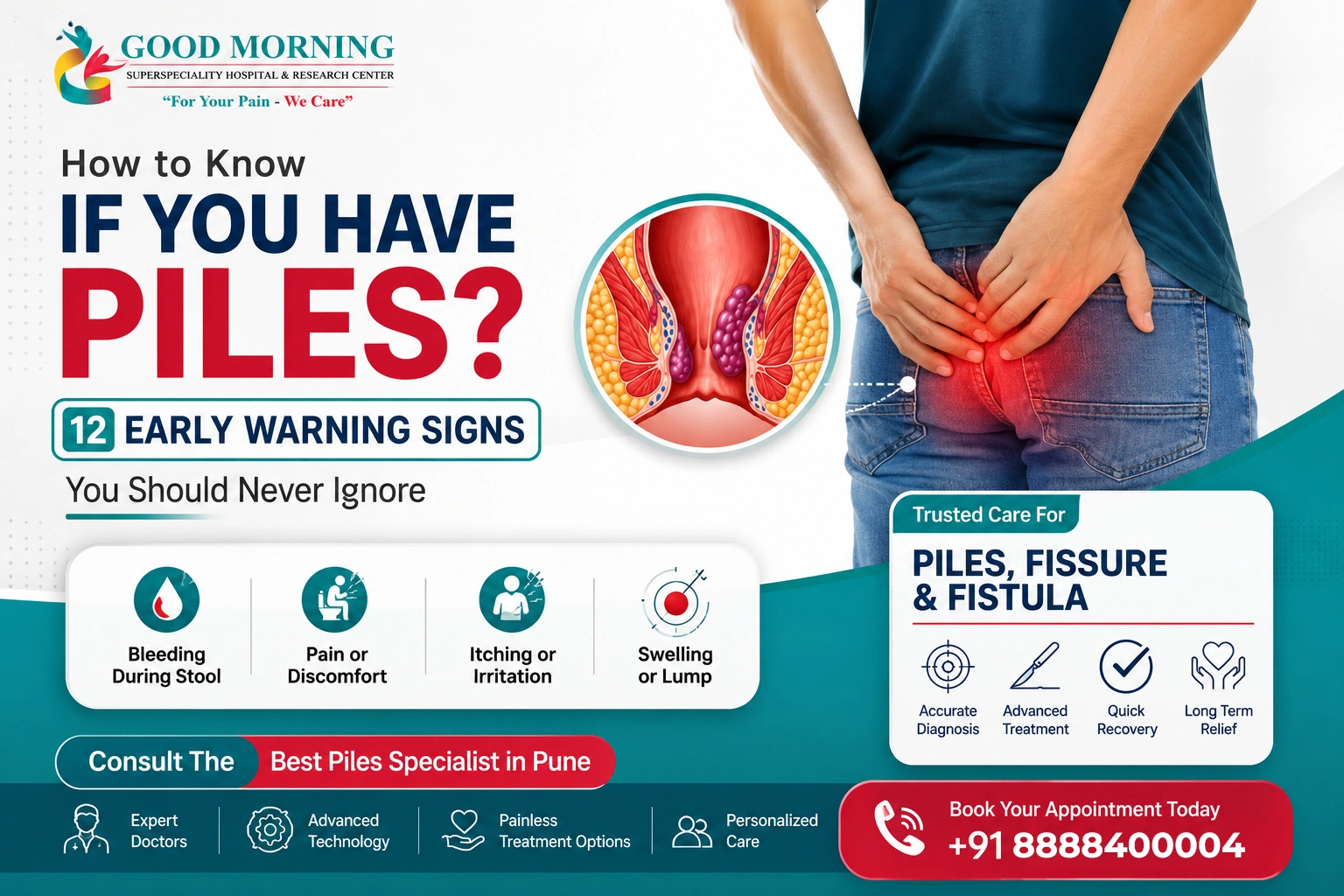
12 Early Warning Signs of Piles You Should Never Ignore
Piles are common yet often ignored. Catching the symptoms early can help you avoid pain, complications, and the need for surgery. Here are the 12 early warning signs you should never overlook.
Bleeding After Passing Stool
Bright red blood on toilet paper, in the toilet bowl, or on the stool is often one of the earliest signs of piles never ignore rectal bleeding.
Pain During Bowel Movements
Passing stool should not be painful. Pain or burning may indicate piles or other anorectal conditions such as fissures.
A Lump Near the Anus
Many people first notice a small lump while cleaning themselves. As piles progress, it may remain outside the anus and become increasingly painful.
Persistent Itching Around the Anal Area
Inflamed piles may release mucus that irritates the surrounding skin, causing continuous itching.
Swelling Around the Anus
Swelling can make sitting, walking, driving, or exercising uncomfortable and should always be evaluated by a doctor.
Burning Sensation
A burning feeling after passing stool usually occurs when swollen hemorrhoids are irritated by hard stools or repeated wiping.
Feeling of Incomplete Bowel Emptying
Large internal piles can create the sensation that your bowels haven't emptied completely.
Mucus Discharge
Clear mucus on toilet paper or underwear may indicate irritation caused by enlarged hemorrhoids.
Difficulty Sitting Comfortably
External piles can make sitting painful common among office workers, drivers, students, and anyone who sits for long hours.
Recurring Constipation
Constipation is both a cause and a result of piles. Repeated straining makes piles worse over time.
Piles Protruding Outside the Anus
As piles enlarge, they may protrude during bowel movements initially returning on their own, later requiring medical treatment.
Symptoms That Keep Returning
If bleeding, itching, swelling, or pain keeps coming back despite home remedies, it's time to consult a specialist.
What Causes Piles?
Several lifestyle habits and medical conditions increase the risk of developing piles, including:
- Chronic constipation and a low-fiber diet
- Drinking insufficient water
- Sitting for prolonged periods
- Pregnancy and obesity
- Heavy weight lifting and lack of exercise
- Frequent straining during bowel movements
- Age-related weakening of tissues
Fortunately, many of these risk factors can be reduced through healthy lifestyle changes.
Who Is at Higher Risk?
- People who sit for long hours at work
- Those who frequently suffer from constipation
- Pregnant or overweight individuals
- People who lift heavy weights regularly
- Those on a low-fiber diet with little exercise
- Adults over the age of 45
When Should You Visit a Doctor?
Consult a specialist immediately if you experience bleeding after bowel movements, severe pain, a lump that becomes larger or more painful, persistent itching or swelling, difficulty sitting, symptoms lasting longer than a week, dark or black stools, fever, pus discharge, or continuous bleeding. Early diagnosis often leads to quicker treatment and faster recovery.
How Are Piles Diagnosed?
Diagnosis is usually simple your doctor may recommend a physical examination, digital rectal examination, anoscopy, proctoscopy, or a colonoscopy if required to rule out other causes of bleeding. An accurate diagnosis helps determine the most suitable treatment.
Modern Treatment Options for Piles
Lifestyle Changes
Many early-stage piles improve with a high-fiber diet, plenty of water, regular exercise, healthy bowel habits, and avoiding prolonged sitting or excessive straining.
Medication
Doctors may prescribe medication to reduce pain, relieve itching, control inflammation, and soften stools helpful for symptom relief but may not eliminate advanced piles.
Advanced Laser Piles Treatment
For moderate to advanced piles, laser piles treatment has become a preferred option because it is minimally invasive, with less post-procedure pain, minimal bleeding, faster recovery, a short hospital stay, and quicker return to daily activities.
Experiencing any of these warning signs?
Get an accurate diagnosis and a personalised treatment plan from our colorectal specialists at Good Morning Superspeciality Hospital, Pune.
Book a Consultation — Call NowCan Piles Be Prevented?
Yes. Simple lifestyle habits can significantly reduce your risk:
- Eat plenty of fruits, vegetables, and whole grains
- Drink enough water daily and exercise regularly
- Maintain a healthy weight and avoid prolonged sitting
- Don't delay bowel movements or strain excessively
- Treat constipation early
Prevention is always easier than treatment.
Why Choose Good Morning Superspeciality Hospital and Research Center?
Our experienced colorectal specialists provide comprehensive diagnosis and personalized treatment for piles, fissures, fistulas, and other anorectal disorders with advanced diagnostic facilities, modern laser piles treatment, personalized treatment plans, and comprehensive follow-up support. Whether you're searching for the Best Piles Doctor in Pune or advanced Laser Piles Treatment in Pune, our team is committed to helping you achieve long-term relief.
Conclusion
Ignoring the early signs of piles can lead to unnecessary pain and complications. Symptoms such as bleeding, itching, swelling, burning, or a lump near the anus should never be overlooked. The earlier piles are diagnosed, the easier they are to treat timely medical care can help you return to a comfortable, healthy, and pain-free life.
Frequently Asked Questions
Yes. Early-stage piles often improve with dietary changes, lifestyle modifications, healthy bowel habits, and medications. More advanced cases may need minimally invasive procedures such as laser treatment.
No. Bleeding may also occur due to anal fissures, inflammatory bowel disease, colorectal polyps, or other gastrointestinal conditions. Always consult a specialist for proper evaluation.
Laser piles treatment is widely used and generally associated with less pain, minimal bleeding, and faster recovery than conventional surgery. Your doctor will confirm if it's right for you.
Yes, piles can recur if constipation, straining, or unhealthy habits continue. Following medical advice and healthy bowel habits significantly reduces the risk of recurrence.
A colorectal surgeon, proctologist, or general surgeon experienced in anorectal disorders is the most appropriate specialist for diagnosis and treatment.
This article is intended for educational purposes only and should not be considered a substitute for professional medical advice, diagnosis, or treatment. Always consult a qualified healthcare professional regarding any medical concerns or symptoms.
