
Piles Diet Chart: What to Eat, What to Avoid and a 7-Day Indian Meal Plan
What to eat in piles, what to limit, and a simple 7-day Indian meal plan with Maharashtrian options, built around the two things that matter most for easier bowel movements: fibre and water.
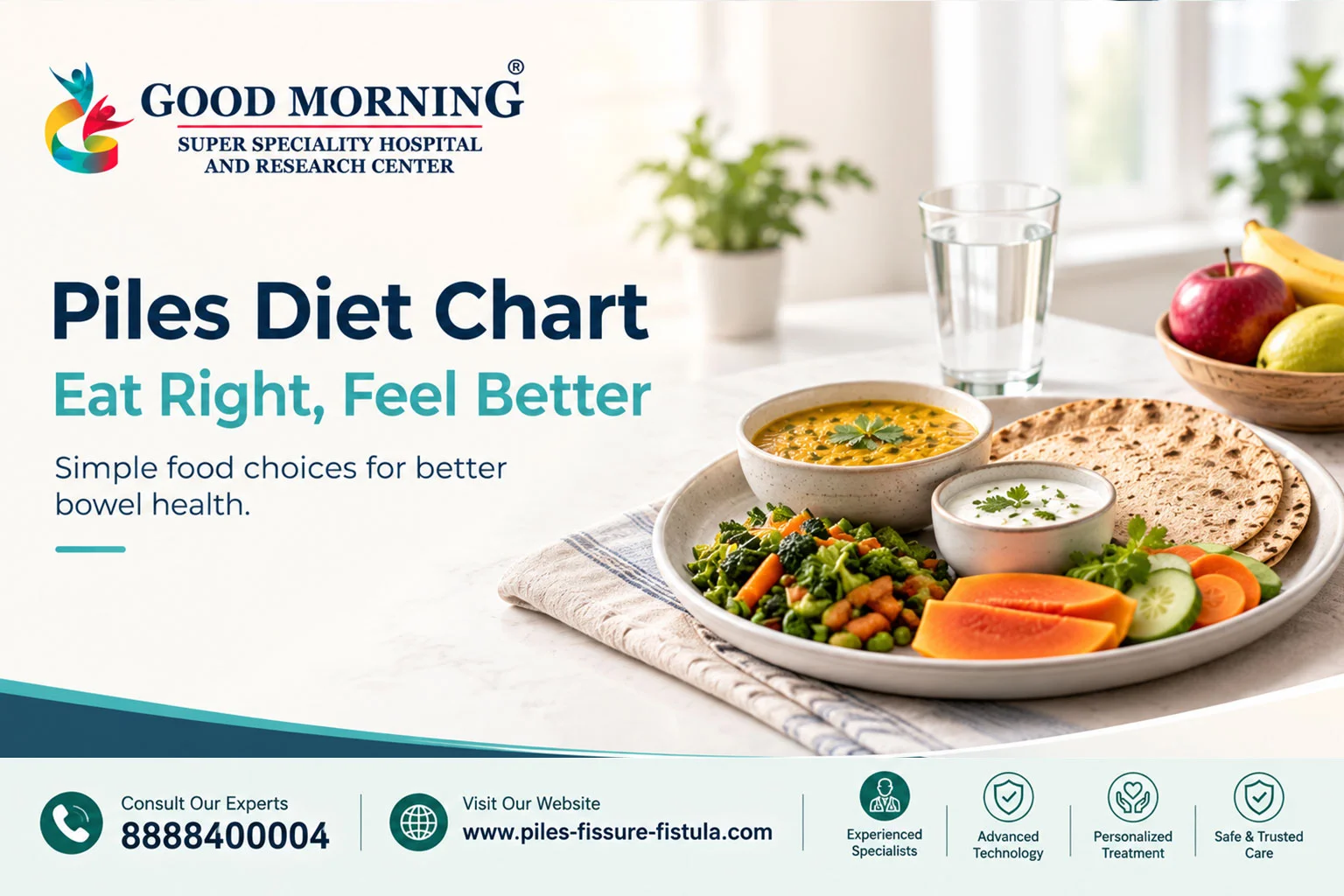
A good piles diet chart is built around two simple things: fibre and water. Together they keep stools soft and easy to pass, so you strain less and the swollen veins around the anus get a chance to settle. This guide explains what to eat in piles, what to limit, and gives you a 7-day Indian meal plan that you can follow at home.
Piles, also called haemorrhoids, are swollen blood vessels in and around the anus and lower rectum. They can cause itching, swelling, discomfort and bleeding with bowel movements. Hard stools and straining are among the most common triggers, which is exactly where diet helps. Guidelines from colorectal surgeons, including the American Society of Colon and Rectal Surgeons, put enough fibre and fluid at the start of treatment for symptomatic piles. Food will not make piles vanish on its own, but the right food and enough water can change how your bowels behave every day.
Quick answer: Eat more fruits, vegetables, dal, whole-wheat roti, oats and dalia, and drink enough fluids through the day. Limit maida, fried and packaged foods. Diet can ease constipation and straining, but bleeding or pain that does not settle needs a doctor's check.
In this guide
How Diet Affects Piles
When your diet is low in fibre and you do not drink enough fluids, stools become hard and dry. Passing them takes effort, and straining raises pressure in the veins around the anus. Over time, this can trigger piles or make existing piles worse.
Fibre adds bulk to stool and helps it move through the gut. With enough water, it keeps stools soft and easier to pass. A fibre-rich diet may help you to:
- Pass stools regularly and more comfortably
- Reduce constipation and hard stools
- Strain less during bowel movements
- Get more benefit from any medicine or treatment your doctor has advised
Diet is a support, not a cure. How much it helps depends on the type and severity of your piles.
What to Eat in Piles: Foods to Include
A piles-friendly diet does not need to be expensive or complicated. Most of the foods below are already part of everyday Indian meals.
Fruits
Papaya, apple and pear (with the washed skin), guava, orange, sweet lime and ripe banana. Choose whole fruit over juice, which has much less fibre.
Vegetables
Palak, methi, carrot, beetroot, pumpkin, peas, beans, lauki, turai and bhindi. If raw salad causes gas, cook the vegetables lightly.
Whole grains
Whole-wheat roti, jowar or bajra bhakri, multigrain thalipeeth, oats, dalia and brown rice. You can keep white rice, just add dal and vegetables to it.
Dal, sprouts and legumes
Moong, masoor, chana (chickpeas), rajma, lobia and sprouts such as usal. Start with small portions if they cause gas.
Nuts, seeds and dry fruits
Almonds, walnuts, flaxseeds and chia seeds. Soaked anjeer (fig) or raisins suit many people. Keep portions modest.
Water and other fluids
Water should be your main drink. Chaas, coconut water and clear vegetable soups also count. Follow your doctor's advice if you have been told to limit fluids.
Using isabgol (psyllium husk) safely
- Isabgol is a commonly used fibre supplement that can help soften stools.
- Never take it dry. Mix it in a full glass of water (about 200 to 250 ml) and drink it straight away.
- Take it 1 to 2 hours apart from your other medicines, because it can affect how some medicines are absorbed.
- Start with a small amount and follow the dose on the product label or your doctor's advice.
- Ask your doctor first if you have difficulty swallowing, severe stomach pain or a history of bowel blockage.
7-Day Piles Diet Chart (Indian Meal Plan)
This sample plan uses simple home-style Indian food, with Maharashtrian options for readers in Pune and PCMC. Adjust the portions to your appetite, age, activity level and any medical condition.
Check with your doctor or dietitian before following this chart if you:
- Have diabetes (rice, poha, banana and dried fruit portions may need adjusting)
- Have kidney or heart disease, or have been told to limit fluids (banana, coconut water, leafy greens and water intake may need limits)
- Take blood thinners (ask how much leafy vegetable is right for you, and keep it steady)
- Have IBS, Crohn's disease, colitis or another bowel condition
- Are pregnant or breastfeeding, or are planning this diet for a child or an older adult
| Day | Breakfast | Lunch | Evening snack | Dinner |
|---|---|---|---|---|
| Monday | Oats with chopped apple or banana | 2 whole-wheat rotis, moong dal, lauki sabzi, cucumber salad | Papaya | Vegetable khichdi with a glass of chaas |
| Tuesday | Vegetable poha with peas, plus one fruit | Rice, rajma and mixed vegetables | Pear or apple | 2 rotis, masoor dal and bhindi |
| Wednesday | Vegetable dalia | 2 jowar bhakris, sprout usal, one vegetable and salad | Guava | Dal khichdi with spinach |
| Thursday | Moong dal chilla with a small bowl of curd | 2 rotis, dal and palak sabzi | Orange or sweet lime | Rice, varan (dal) and pumpkin sabzi |
| Friday | Vegetable upma with peas | 2 rotis, chana masala with less oil, salad | Fruit with a handful of almonds and walnuts | Vegetable soup with 2 rotis |
| Saturday | Multigrain thalipeeth with curd | Rice, chole and a vegetable | Seasonal fruit | 2 rotis, dal and lauki sabzi |
| Sunday | Vegetable poha or dalia, plus one fruit | Home-style thali: dal, two vegetables, roti and salad | Fruit | 2 rotis, mixed vegetables and dal |
Tips for following the chart
- Increase fibre slowly. A sudden jump can cause gas and bloating. Add one fibre-rich food at a time.
- Drink water through the day, not only with meals.
- Keep meals balanced: vegetables, a whole grain and a protein such as dal, sprouts or curd.
- Non-vegetarians can have egg, fish or chicken once or twice a week in place of dal, with vegetables on the side.
- Go easy on oil and ghee. Home-cooked, lightly spiced food usually suits piles better than heavy gravies.
This is a general sample, not a personalised diet prescription.
Not sure which foods suit your piles? Ask our team directly.
📞 Call to AskFoods to Limit in Piles
No single food causes piles, and nobody needs a strict ban list. But some foods are low in fibre or tend to worsen constipation, so it helps to have them less often.
✔ Choose more often
- Whole-wheat roti, bhakri, oats and dalia
- Fruits and vegetables
- Dal, sprouts and other legumes
- Water and chaas
✘ Have less often
- Maida products: white bread, pav, biscuits, noodles
- Samosa, vada pav, namkeen and chips
- Fast food and heavy restaurant meals
- Too much red or processed meat
- Soft drinks and sugary packaged drinks
- Excess alcohol, and tea or coffee in place of water
The aim is not to remove these foods forever. It is to stop them from pushing fibre-rich meals off your plate.
What about spicy food?
Spicy food is not a proven cause of piles, but chilli can make burning or irritation worse in some people during a bowel movement. If very spicy meals clearly trigger your symptoms, reduce them. You can read more in our article on whether spicy food really causes piles.
Is It Good for Piles? Common Food Questions
Is banana good for piles?
Yes, ripe banana can be part of a piles-friendly diet. Its effect on your stools depends on ripeness, portion size and the rest of your meal. If banana suits your digestion, have it at breakfast or as a snack.
Is rice good for piles?
Yes. White rice has less fibre than brown rice, but it does not have to be avoided. Eat it with dal and vegetables, and switch some meals to brown rice or other whole grains.
Are curd and milk good for piles?
Curd and chaas can be included if your digestion tolerates dairy. They are not a treatment for piles. If milk or curd causes bloating or loose stools, cut back and ask your doctor if the symptoms continue.
Can I eat egg, chicken or fish with piles?
Yes, in moderate amounts. Boiled or lightly cooked preparations are better than very oily or heavily spiced ones. Always add vegetables and a whole grain, because meat has no fibre.
Is tea or coffee allowed?
One or two cups a day is usually fine for most people. Problems start when tea or coffee replaces water. If you are constipated, drink water first.
How Much Fibre and Water Do You Need?
Many guidelines suggest roughly 25 to 30 grams of fibre a day for adults, though targets vary by age, sex and guideline, and most people eat much less. You do not need to count grams. If every main meal has vegetables, dal or a whole grain, and you eat a fruit or two daily, you are heading in the right direction.
Increase fibre gradually over a couple of weeks and drink more water as you do. If you have severe stomach pain, vomiting or cannot pass stool at all, do not just add more fibre or start supplements. See a doctor.
Daily Habits That Support Your Piles Diet
Food is only one part of the picture. These habits help your diet work better:
- Do not strain. Pushing hard raises pressure around the anus.
- Do not hold back the urge. Delaying a bowel movement makes stools harder.
- Limit toilet time. Avoid sitting for long periods with a phone or newspaper.
- Keep moving. A daily walk supports regular bowels. See how sitting all day can affect your piles.
- Follow your doctor's advice. Do not stop prescribed treatment just because symptoms improve.
Can Diet Cure Piles? When to See a Doctor
No food or diet can promise a cure for piles. Dietary changes often reduce constipation and straining, and that can ease mild symptoms. But the result depends on the type and grade of your piles. Some people improve with diet and lifestyle changes. Others need medicines, a minor procedure or surgery.
See a doctor soon if you notice
- Rectal bleeding that keeps coming back or lasts more than a few days
- Strong or increasing pain
- A new lump or swelling that does not go away
- No improvement after about a week of home care
- Bleeding along with a change in bowel habits, unexplained weight loss, or feeling weak and pale, especially if you are over 40 or have a family history of bowel cancer
Get medical care today if you have
- Heavy bleeding that will not stop
- Black or tar-like stools
- Dizziness or fainting
- Swelling with fever
Rectal bleeding should never be assumed to be piles without a proper check, because other conditions can look similar. Our guide on when to see a piles specialist in Pune can help you decide how soon to go, and do you really need piles surgery explains what to ask if a procedure is suggested.
Piles Treatment in Pune and PCMC
If diet and lifestyle changes are not enough, a specialist can examine you, confirm the diagnosis and explain the options that suit your stage of piles, from medicines to laser piles treatment and other procedures. Good Morning Superspeciality Hospital and Research Center treats piles, fissure, fistula and related anorectal conditions, and care is led by Dr. Sandip Bhosale, Consultant Procto-surgeon. Patients come from Thergaon, Wakad, Kalewadi and across PCMC.
Ready to Book Your Consultation?
Book a consultation to understand your symptoms and the treatment options that may suit you.
Explore More Piles Care
Piles Hospital in PCMC
Treatment options, patient journey and location of our PCMC hospital.
Piles Treatment in Thergaon
Symptoms, grades and diagnosis explained for patients based in Thergaon.
Laser Piles Treatment
How laser treatment works, who it suits and what recovery involves.
Constipation Treatment
If constipation is your main problem, see how it is assessed and treated.
Final Takeaway
A simple piles diet chart built on fibre-rich fruits, vegetables, whole grains, dal and plenty of water can make stools softer and bowel movements easier. Pair it with good toilet habits and regular movement for the best effect. Diet will not cure every case of piles, so if you have bleeding, pain or a lump that does not settle, get a proper examination instead of guessing.
Frequently Asked Questions
The best piles diet chart is a balanced, fibre-rich one: fruits, vegetables, whole grains, dal and enough fluids, adjusted to your food preferences and digestion. The 7-day Indian meal plan above is a good starting point.
Papaya, apple, pear, guava, orange, sweet lime and ripe banana are good choices. Whole fruits are better than juices because they keep their fibre.
Limit maida products, fried and packaged snacks, fast food, soft drinks, excess red meat and too much alcohol. Reduce very spicy food if it clearly worsens your burning or irritation.
Yes, indirectly. Enough fluid works with dietary fibre to keep stools soft and easier to pass, which reduces straining. If you have a medical condition that limits fluids, follow your doctor's advice.
Isabgol is a commonly used fibre supplement that can help soften stools. Never take it dry: mix it in a full glass of water, take it apart from other medicines and check with your doctor first if you take regular medicines or have bowel or swallowing problems.
Mild piles sometimes improve with diet and lifestyle changes, but there is no guarantee. Larger or recurring piles may need medical treatment or a procedure, and a specialist can tell you which applies to you.
See a doctor if you have repeated rectal bleeding, severe pain, a new lump, or symptoms that do not improve after about a week of home care. Heavy bleeding, black stools, dizziness or fainting need urgent care.
Medical disclaimer: This article is for general educational purposes only and does not replace professional medical advice, diagnosis or treatment. The sample diet chart is not a personalised prescription, and needs vary with age, health conditions and medicines. Consult a qualified medical professional about your symptoms. If you have heavy bleeding, fainting, black stools or fever with swelling, seek medical care immediately.
