
5 Everyday Habits That May Be Making Your Piles Worse
If your piles keep flaring up, the cause may not be the treatment. Everyday habits at home can add to constipation, straining and pressure around the anal area, making symptoms harder to manage.
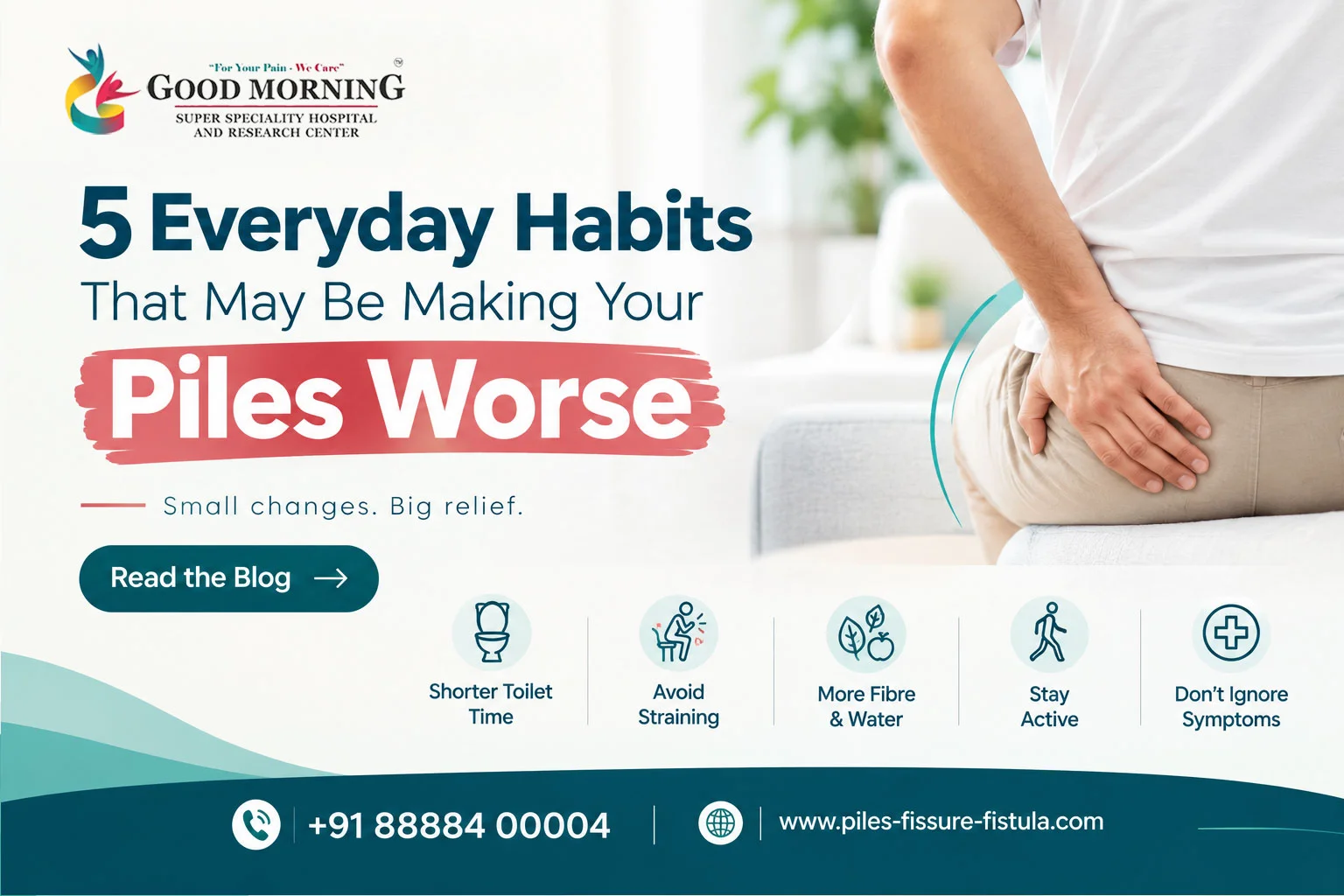
If your piles keep flaring up, the reason may not always be the treatment you are receiving. Sometimes, everyday habits at home can contribute to constipation, straining and increased pressure around the anal area, making existing symptoms more difficult to manage.
Piles (haemorrhoids) are swollen blood vessels in and around the anus and lower rectum. Habits such as spending too much time on the toilet, straining to pass stool, eating too little fibre, drinking inadequate fluids and remaining seated for long periods may contribute to symptoms. Understanding these habits that can worsen piles can help you make practical changes to your daily routine. If symptoms keep returning, a piles specialist in Pune can help identify what is actually causing them.
Quick answer: 5 habits that may make piles worse
- Sitting on the toilet for too long
- Straining or repeatedly delaying the urge to pass stool
- Eating too little fibre and not drinking enough fluids
- Sitting for most of the day
- Ignoring recurring symptoms or self-treating for too long
Not sure what's causing your symptoms?
Get an accurate diagnosis from our colorectal specialists at Good Morning Superspeciality Hospital, Pune, instead of guessing.
1. Sitting on the Toilet for Too Long
For many people, the bathroom has become another place to scroll through messages, reels, news or social media. A quick visit can easily turn into 15 or 20 minutes.
Spending a long time sitting on the toilet, particularly when you are straining, can increase pressure in the veins around the anal and rectal area. If you already have piles, this may make discomfort or other symptoms more difficult to manage.
What can help?
- Leave your phone outside the bathroom.
- Avoid sitting on the toilet longer than necessary.
- If you cannot pass stool without repeated straining, get up and try again later.
- A small footstool under your feet may help bring your knees into a more comfortable position while passing stool.
The goal is to allow bowel movements to happen naturally rather than trying to force them.
2. Straining or Holding in the Urge to Pass Stool
Straining is a common problem when stools are hard or constipation is present. Repeatedly pushing forcefully can increase pressure in the blood vessels around the rectum and may aggravate piles.
But there is another habit worth paying attention to: regularly ignoring the urge to pass stool. Busy schedules, travel and uncomfortable public toilets can make people postpone bowel movements. When stool remains in the bowel for longer, it can become harder and more difficult to pass, potentially leading to more straining later.
What can help?
- Use the toilet when you naturally feel the urge.
- Avoid repeatedly pushing or forcing a bowel movement.
- Work on the underlying constipation rather than simply increasing pressure.
- Increase fibre and fluids gradually, and stay physically active.
If constipation continues for several weeks or keeps returning, it is better to have it evaluated rather than repeatedly managing it on your own. You can also read our guide on constipation treatment in Pune.
3. Eating Too Little Fibre and Drinking Too Little Water
What you eat can influence how easily you pass stool. A diet that is consistently low in fibre may contribute to harder or less regular bowel movements. This can increase the need to strain, which may aggravate piles symptoms.
Fibre is naturally found in vegetables, fruits, whole grains, pulses, beans, nuts and seeds. Adequate fluid intake also helps support normal bowel function.
What can help?
- Increase fibre gradually rather than making a sudden large change. A sudden increase may cause bloating or gas in some people.
- Include vegetables and fruits regularly in your meals.
- Choose whole grains and pulses where appropriate.
- Drink adequate fluids throughout the day.
- Aim for an overall balanced diet rather than relying on a single "magic" food for piles.
Wondering whether your favourite spicy food is responsible? Read our guide: Can spicy food really cause piles?.
4. Sitting for Most of the Day
Desk jobs, long commutes and screen-based routines mean that many people spend several hours sitting every day. Sitting itself does not automatically cause piles. However, a highly sedentary routine can contribute to constipation and irregular bowel habits in some people. Our detailed guide explains whether sitting all day can cause piles.
What can help?
You don't need an intense exercise routine to become more active. Try to:
- Stand up and move around regularly during the workday.
- Take short walking breaks after prolonged sitting, and include a regular walk in your daily routine.
- Avoid remaining seated continuously for several hours.
- When exercising or lifting weights, avoid repeatedly holding your breath and straining.
Consistency matters more than doing an intense workout occasionally.
5. Ignoring Symptoms or Self-Treating for Too Long
A small amount of bleeding, mild itching or occasional discomfort can be easy to dismiss. Some people continue using over-the-counter creams for weeks or repeatedly try home remedies without finding out what is actually causing the symptoms. Others may scrub the area excessively or use strongly fragranced soaps and wipes, which can irritate sensitive skin.
More importantly, not every case of rectal bleeding is caused by piles. A fissure, a fistula or pruritus ani can have similar symptoms.
What can help?
- Clean the area gently with water and pat dry rather than aggressively rubbing.
- Avoid harsh, fragranced products if they cause irritation.
- Don't continue self-treatment indefinitely without understanding the cause.
- Seek medical advice if symptoms keep returning or become more severe.
You can read more in our guide to piles symptoms you shouldn't ignore.
Small Changes That Make a Real Difference
You don't need to change your whole lifestyle overnight. Start with a few realistic habits:
Keep Toilet Time Short
Leave the phone outside, go, finish and get up.
Don't Strain
Work on the underlying cause of difficult bowel movements instead of pushing harder.
Respond to the Urge
Avoid repeatedly delaying bowel movements because you are busy.
Improve Your Diet Gradually
Include adequate fibre as part of a balanced diet.
Drink Enough Fluids
Keep water within reach through the day.
Stay Active
Break up long periods of sitting with regular movement.
Quick Habit Fixes at a Glance
| Everyday Habit | A Better Approach |
|---|---|
| Spending too long on the toilet | Keep toilet time brief and leave the phone outside |
| Straining to pass stool | Address constipation instead of pushing harder |
| Holding in the urge | Go when you naturally feel the urge |
| Low-fibre diet | Gradually add fibre-rich foods |
| Not drinking enough fluids | Maintain adequate fluid intake |
| Sitting for long periods | Take regular movement and walking breaks |
| Repeated self-treatment | Get the symptoms properly evaluated |
Can Changing These Habits Cure Piles?
Lifestyle changes can help reduce symptoms and may lower the likelihood of flare-ups, particularly when constipation and straining are contributing factors. However, lifestyle changes do not guarantee that every case of piles will resolve completely.
The appropriate management depends on the type and severity of piles, how long symptoms have been present, whether the piles have prolapsed, and other individual factors. Some people may improve with dietary and lifestyle changes. Others may require medication or a procedure following a proper clinical evaluation. The important thing is to identify the underlying problem rather than repeatedly treating the symptoms without knowing their cause.
Do You Always Need Laser Treatment for Piles?
No. Laser treatment is not automatically required for everyone with piles. The appropriate treatment depends on the type and severity of the condition, symptoms, previous treatment and the specialist's assessment.
If you are researching a Painless Piles Laser Treatment Hospital in Pune, don't choose a treatment simply because it is described as "laser." A consultation should first determine whether the procedure is appropriate for your condition. Compare laser vs traditional piles surgery or read about laser piles treatment in Pune.
When Should You See a Piles Specialist?
Occasional mild symptoms may improve with better bowel habits, but recurring or worsening symptoms should not simply be ignored. Consider consulting a specialist if you experience:
Talk to a specialist if you notice
- Repeated bleeding during or after bowel movements
- Increasing pain or swelling
- A lump around the anus, or one that does not go back in on its own
- Symptoms that repeatedly return
- Persistent constipation or difficulty passing stool
- Symptoms that are affecting your normal routine
Seek prompt medical attention if you notice
- Heavy or significant bleeding
- Black or very dark stools
- A persistent change in bowel habits
- Unexplained weight loss
- Dizziness, weakness or fainting associated with bleeding
These symptoms should not automatically be attributed to piles and may require further medical assessment. Not sure who to consult? Read how to choose the best piles specialist in Pune.
Recurring symptoms shouldn't be ignored
A proper evaluation tells you whether it's piles, fissure, fistula, or something else entirely.
Piles Treatment Near You in Pune & PCMC
If you are looking for a Piles Hospital in Pune, choose a centre where your symptoms are properly evaluated and treatment is recommended according to your individual condition, not one that suggests the same procedure to everyone. Good Morning Superspeciality Hospital & Research Center, Dange Chowk, Thergaon, provides evaluation and treatment for piles, fissure and fistula to patients across Pune and Pimpri-Chinchwad. Choose your area:
Best Piles Doctor in Dange Chowk
Our hospital is here, near the flyover bridge at Jai Hind Nagar, Thergaon.
Piles Treatment in Thergaon
Symptoms, treatment options and what to expect at your consultation.
Best Piles Specialist in Wakad
Specialist care for patients travelling from Wakad and nearby areas.
Best Piles Doctor in Kalewadi
Piles evaluation and treatment for patients from Kalewadi.
Piles Hospital in PCMC
Hospital facilities and care for patients across Pimpri-Chinchwad.
Piles Doctors in Pimpri-Chinchwad
Meet the surgeons and anaesthetists who treat you.
Final Takeaway
Piles are not influenced only by medical treatment. Your everyday bowel and lifestyle habits can also affect how comfortable you feel and whether symptoms keep returning. Spending less time on the toilet, avoiding unnecessary straining, maintaining a fibre-rich diet, drinking adequate fluids and staying physically active are practical steps that can support better bowel health.
However, recurring bleeding, persistent pain, swelling or other unusual symptoms should not simply be assumed to be piles. If symptoms continue despite lifestyle changes, getting an accurate diagnosis is more useful than repeatedly trying different home remedies or treatments.
Frequently Asked Questions
Spending a prolonged amount of time on the toilet, especially while straining, can increase pressure around the anal area. Keeping toilet time brief is a sensible habit for people experiencing piles symptoms.
Constipation can lead to harder stools and increased straining. Repeated straining may aggravate piles, which is why maintaining regular and comfortable bowel movements is important.
A low-fibre diet can contribute to constipation and harder stools. Including adequate fibre as part of a balanced diet can help support easier and more regular bowel movements.
Regular walking can support overall bowel regularity and reduce prolonged sedentary time. It is a supportive lifestyle measure, not a replacement for medical treatment when treatment is required.
Raising your feet can place your knees in a more elevated position and may make passing stool more comfortable for some people. It is a useful bowel-positioning strategy but does not treat piles by itself.
No. Although piles are a common cause of rectal bleeding, they are not the only possible cause. Recurring or unexplained bleeding should be evaluated by a qualified healthcare professional.
No. Treatment depends on the type and severity of the condition and the patient's individual circumstances. A specialist should determine whether laser treatment or another approach is appropriate.
Avoid unnecessary straining, keep toilet time short, maintain adequate fibre and fluid intake, stay physically active and seek medical advice if symptoms persist, recur or become more severe.
Keep Reading
12 Early Warning Signs of Piles
Signs most people ignore.
Modern Piles Treatment Options in Pune
From lifestyle changes to laser treatment.
This article is intended for general educational purposes and should not be considered a substitute for professional medical diagnosis or treatment. Treatment suitability, recovery and outcomes can vary from patient to patient. Consult a qualified healthcare professional for advice based on your individual symptoms and medical history.
