
Piles Coming Back After Treatment? Causes and Next Steps in Pune
Why piles symptoms may return, what recurring bleeding could mean, what to ask your doctor and when to get re-examined, explained by the piles specialists at Good Morning Hospital, Thergaon.
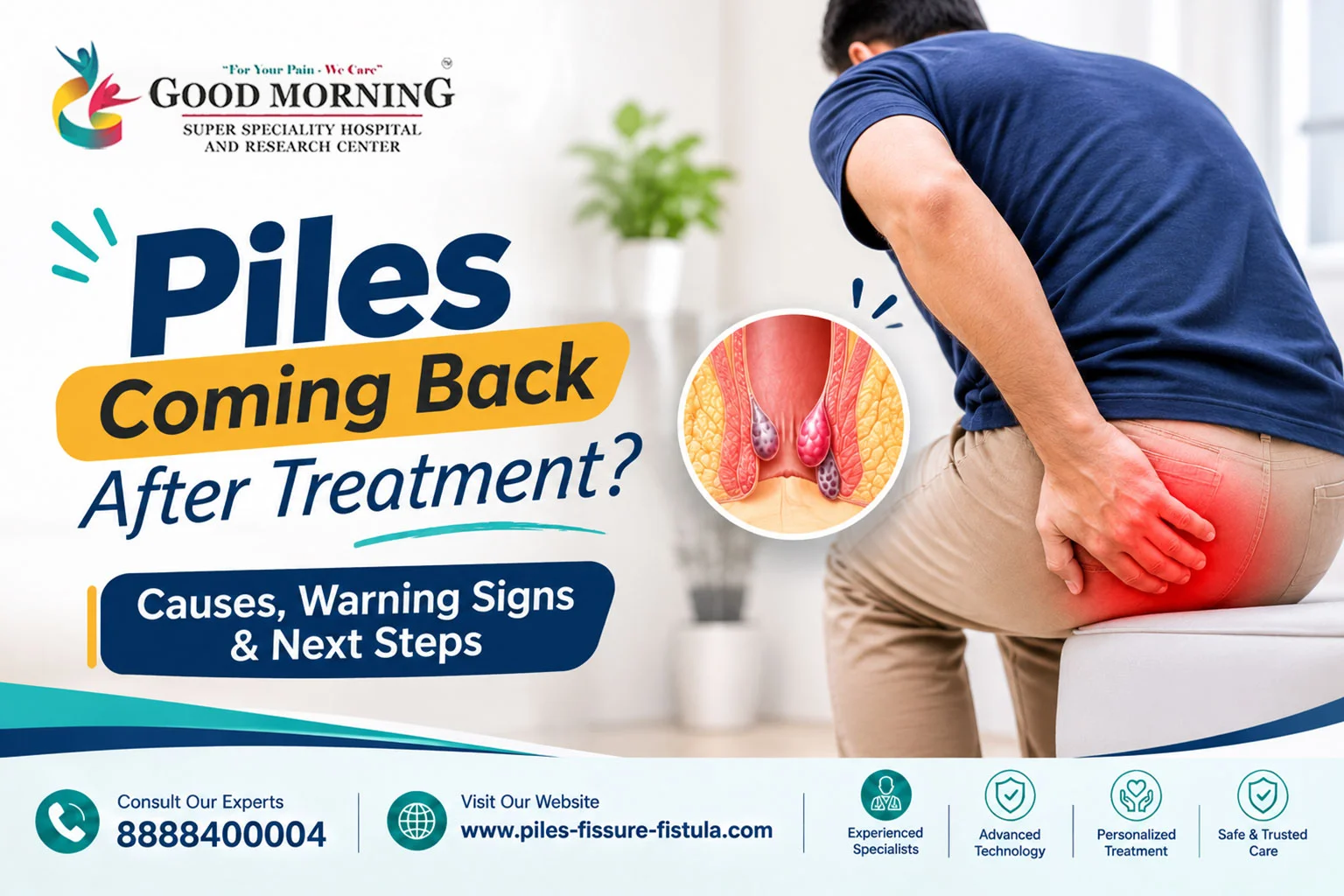
Piles coming back after treatment can be frustrating, especially when you expected lasting relief. If you are searching for the best piles specialist in Pune, the first step is to understand why symptoms returned and to get the right medical evaluation.
Recurrent piles can happen for different reasons. Existing haemorrhoids may persist, new haemorrhoids may develop, or the symptoms may be caused by another anorectal condition. Knowing the actual cause helps decide the right next step. In this guide, our team at Good Morning Superspeciality Hospital and Research Center in Thergaon, Pune explains why piles symptoms may return, what recurring bleeding could indicate, and when you should consult a specialist.
Quick answer: Piles symptoms can return because of constipation, straining, remaining haemorrhoidal tissue, new haemorrhoids or another anorectal problem such as a fissure. Returning symptoms do not automatically mean your earlier treatment failed or that another surgery is needed. Get re-examined so the actual cause is identified.
Why Can Piles Symptoms Return After Treatment?
Piles, medically known as haemorrhoids, are swollen vascular cushions in and around the anal canal. Treatment aims to control symptoms or address the affected tissue, depending on your condition. However, treatment does not always remove every factor that contributes to haemorrhoids. These are the common reasons symptoms return:
Constipation and straining
Repeated straining raises pressure in the anal region and may aggravate existing piles or trigger new symptoms, even after successful treatment.
Existing piles may persist
Results depend on the type, grade and severity of piles. Some tissue may stay symptomatic, which is why follow-up and reassessment matter.
New haemorrhoids may develop
Treatment deals with the existing problem. It does not make anyone permanently immune to piles in the future.
Irregular bowel habits
Delaying the urge, straining and sitting too long increase pressure. Read about habits that worsen piles and prolonged toilet sitting.
Does Bleeding After Piles Treatment Mean the Condition Has Returned?
Not necessarily. Bleeding after a piles procedure does not always mean haemorrhoids have come back. The timing, quantity and associated symptoms are important.
During the recovery period
- A small amount of bleeding or spotting may occur after certain procedures
- Recovery time varies with the procedure and your condition
- Follow the discharge instructions given by your doctor
Weeks or months later
- Bleeding after you have recovered needs a proper cause
- Heavy, increasing or persistent bleeding is not normal healing
- Call your doctor if it continues, increases or returns
If bleeding appears again after recovery, possible reasons include:
- Persistent or recurrent haemorrhoids
- Anal fissure (see our fissure treatment in Pune page)
- Inflammation around the anal or rectal region
- Other intestinal conditions
- Polyps or other colorectal diseases
Persistent or recurrent rectal bleeding should not automatically be blamed on piles. Depending on your symptoms, age, medical history and family history, your doctor may recommend further investigations, including colonoscopy. Bleeding is a symptom, not a diagnosis.
Go for urgent care straight away if
- Bleeding is heavy or does not stop
- You feel dizzy, faint or light-headed
- Pain is severe
- You feel seriously unwell
What Should You Do If Piles Symptoms Return?
Avoid panicking or assuming that another surgery is required. A proper reassessment shows whether the original condition has persisted, new haemorrhoids have developed, or another problem is responsible.
- Review your previous treatment: Tell your doctor whether you had laser treatment, rubber band ligation, stapler treatment or conventional surgery, when it was done, and whether symptoms disappeared completely.
- Explain your current symptoms: Mention when the bleeding, swelling, pain or discomfort started again, and whether it occurs only during bowel movements or through the day.
- Get re-examined: Depending on your symptoms, the doctor may recommend a physical examination, anoscopy or other investigations.
- Avoid restarting old medicines without advice: Earlier creams and tablets may not suit your current condition, because different anorectal problems can look similar but need different management.
Piles symptoms back after treatment? Get re-examined early.
📞 Call to BookCan Piles Be Treated Again Without Surgery?
Yes, in selected cases. Not every patient with recurring piles needs another surgery. Depending on severity and type, the doctor may consider conservative management or suitable outpatient procedures such as rubber band ligation, injection therapy (sclerotherapy) or other minimally invasive approaches. If symptoms are persistent or the haemorrhoids are more advanced, a surgical procedure may be considered.
The decision depends on your clinical examination, previous treatment, current symptoms and overall health. To compare procedures, read our guide on laser vs stapler vs banding. If you are unsure whether surgery is needed at all, see do you really need piles surgery.
Is Laser Piles Treatment Suitable When Symptoms Return?
Laser treatment is one of the approaches used for selected cases of haemorrhoids, but it is not automatically the right solution for every patient with recurring symptoms. Before recommending it, a specialist may consider:
If you are looking for a painless piles laser treatment hospital in Pune, discuss the suitability, benefits, limitations, possible complications and recovery expectations with your doctor. No procedure can guarantee that haemorrhoids will never return. Learn more about laser piles treatment in Pune.
How Can You Reduce the Chances of Piles Returning?
Recurrence cannot always be prevented, but healthy bowel habits can reduce some of the contributing factors.
Eat fibre-rich foods
Fruits, vegetables, whole grains and dal support regular bowel movements. See our piles diet chart.
Drink enough water
Adequate fluids support normal bowel function. Your needs vary with health and activity.
Avoid straining
Do not force bowel movements. Repeated straining increases pressure around the anus.
Stay active
Regular movement supports digestion and breaks long periods of sitting.
Do not ignore the urge
Repeatedly delaying a bowel movement can contribute to constipation.
Manage constipation early
If it continues despite diet and lifestyle changes, consult a doctor.
These practices support bowel health but cannot guarantee that piles will not recur.
When Should You Consult a Piles Specialist?
Many people delay consultation because they feel uncomfortable discussing symptoms in this area, but repeated symptoms deserve proper medical attention. Consider consulting a qualified specialist if you have:
- Repeated bleeding during or after bowel movements
- Swelling or a lump around the anal opening
- Persistent itching or discomfort
- Pain during bowel movements
- Tissue protruding from the anal opening
- Symptoms that continue despite previous treatment
To know when a consultation becomes necessary, read when to see a piles specialist in Pune and the early warning signs of piles.
What Should You Ask Your Doctor When Piles Symptoms Return?
Questions to ask at your next consultation
- Have my previous haemorrhoids persisted, or have new ones developed?
- Could my symptoms be related to an anal fissure or another condition?
- Do I need any additional examination or investigation?
- Is non-surgical treatment suitable for my current condition?
- If another procedure is recommended, what are its benefits and possible risks?
- What should I do to manage constipation and reduce contributing factors?
- When should I come for a follow-up appointment?
These questions help you understand your condition and make informed decisions about further treatment.
Looking for a Piles Specialist in Thergaon?
Good Morning Superspeciality Hospital and Research Center is a trusted piles specialist in Thergaon, with care led by Dr. Sandip Bhosale, Consultant Procto-surgeon. The hospital provides consultation and treatment for piles, anal fissure, fistula and pilonidal sinus. Treatment options, including laser procedures, are considered depending on your condition and clinical assessment. To know more, read why Good Morning is a preferred piles hospital in Pune.
Piles Doctor Near You: Dange Chowk, Wakad, Kalewadi and PCMC
Our hospital stands by the Dange Chowk flyover in Thergaon, so piles treatment in PCMC does not mean a long trip into the city. Pick your area below to see how we can help.
Wakad and Punawale
Reach us through Dange Chowk. See how a piles specialist in Wakad can examine you and plan treatment.
Kalewadi and Rahatani
Look for the Dange Chowk landmark. See our page for a piles specialist in Kalewadi.
Pimpri, Chinchwad and Nigdi
Patients come from across the city. Explore our piles hospital in PCMC page.
Piles Symptoms Back After Treatment?
Speak to our team, get re-examined and learn which treatment, if any, fits your condition.
Final Takeaway
Experiencing piles symptoms again after treatment can be frustrating, but it does not automatically mean your previous treatment has failed or that another surgery is necessary. The important step is to understand the actual reason behind the symptoms. Proper diagnosis, an individually planned treatment approach and attention to bowel health help you make informed decisions. If you have repeated bleeding, swelling or discomfort, do not rely on temporary relief or old medicines. Get examined.
Frequently Asked Questions
Piles symptoms may return due to persistent haemorrhoidal tissue, the development of new haemorrhoids, constipation or repeated straining. Sometimes the symptoms are caused by another anorectal condition. A medical examination helps identify the actual reason.
Yes. Persistence or recurrence of symptoms is possible after laser treatment. The outcome depends on the severity of the condition, the procedure performed and individual factors. Laser treatment does not guarantee permanent prevention of haemorrhoids.
No. Some patients may benefit from conservative management or non-surgical procedures. Surgery may be considered depending on the type, grade and severity of haemorrhoids and the patient's previous treatment history.
Common symptoms include bleeding during bowel movements, swelling, itching, discomfort and a lump around the anal opening. However, these symptoms may also occur with fissures and other conditions, so proper examination is important before confirming the diagnosis.
A fibre-rich diet, adequate fluid intake, regular physical activity and avoiding excessive straining can help reduce contributing factors. However, these measures cannot guarantee that haemorrhoids will not recur.
Consult a qualified specialist experienced in evaluating and treating anorectal conditions. At Good Morning Superspeciality Hospital and Research Center, Dange Chowk, Thergaon, care is led by Dr. Sandip Bhosale, Consultant Procto-surgeon, who can review your previous treatment and recommend a suitable plan.
Persistent symptoms can affect daily comfort and quality of life. Repeated bleeding may also need investigation to identify its cause, and delaying evaluation can leave other conditions undiagnosed. Seek medical advice if symptoms continue or return.
Disclaimer: This article is meant to inform and cannot replace advice from a doctor who has examined you. Your symptoms, age and medicines affect what is right for you. Seek urgent care for heavy bleeding, fainting, severe pain or if you feel seriously unwell.
About the Author

Consultant Procto-surgeon, ZSR Circumcision Expert